


The role of each page in the customer journey

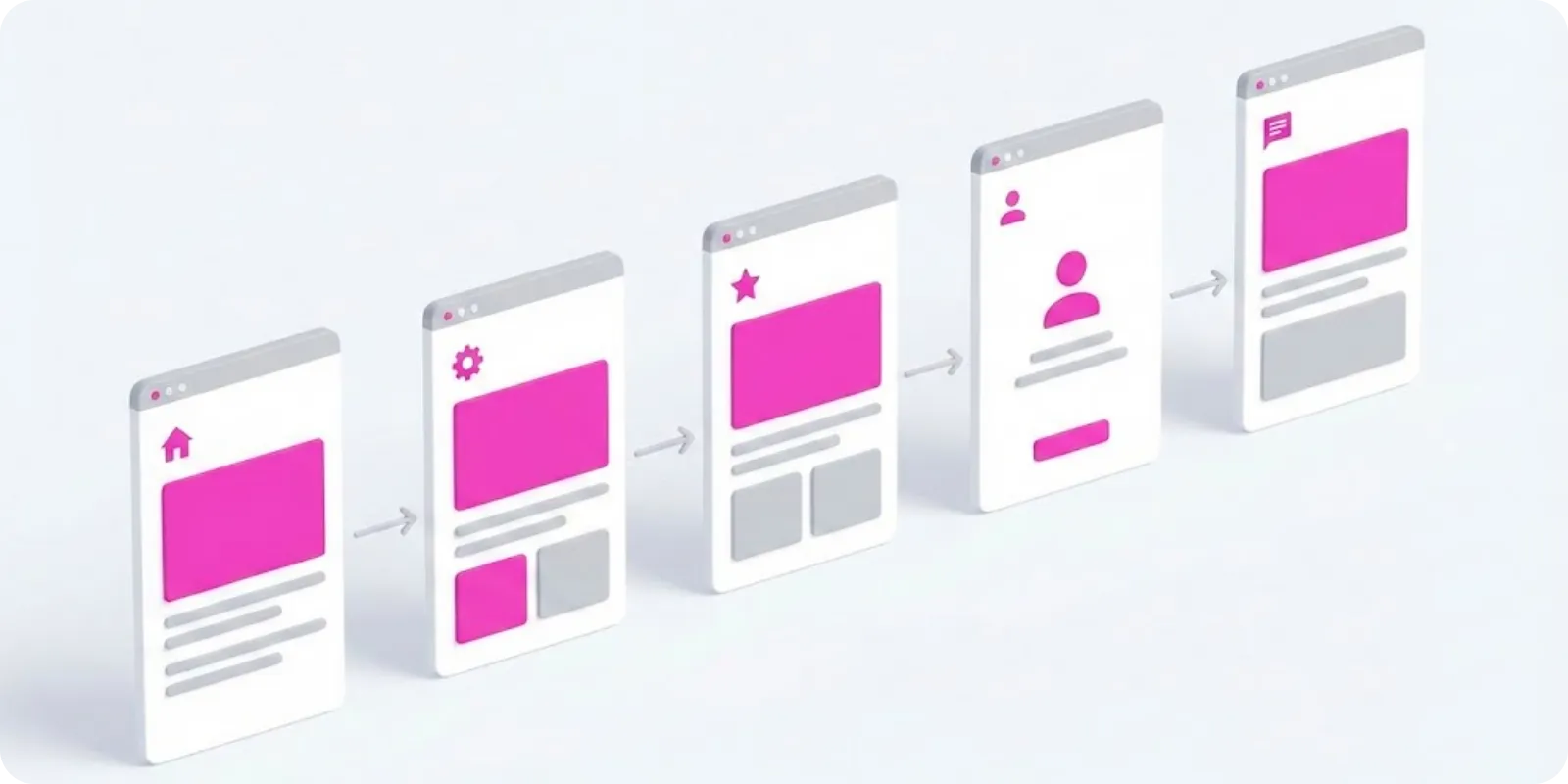
Home, services, about, cases, and contact don't exist by chance.
Each page helps (or hinders) the path of someone who is still deciding whether they want to do business with you.
It is common to think of the site as a set of independent pages:
- “The home page is ready”
- “Only the services page is missing”
- “One day I'll do the about page”
In practice, each page is a step in the decision journey.
When we design, we like to see it this way:
- “If this page were a person, what would they be saying to the visitor right now?”
Home: the invitation
The home page is the first contact many people have with your brand.
It needs to:
- Situate (who you are, what you do, for whom)
- Filter (who is in the right place, who is not)
- Offer clear paths (services, about, cases, contact...)
It doesn't need to tell everything.
It just needs to make it clear that it's worth continuing.
Services: what you really deliver
On the services page, the focus shifts from “who we are” to “how we can help you”.
Best practices:
- Separate services into clear blocks, with titles that make sense to the client
- Talk about results, not just features
- Indicate who that service is ideal for
- Show real examples or use cases
Each service should be a mini landing page.
Cases/Portfolio: proof in context
Cases aren't just pretty screenshots.
A good case study page answers:
- What was the scenario before
- What was done
- What kind of result was achieved (even if qualitative)
- What learning did that bring
More than impressing, the goal is to make the visitor think:
“This could be me.”
About: who is behind it
The “About” page helps take the brand out of the abstract.
It can:
- Tell the story of how the company was born
- Show who the people behind the work are
- Explain why you decided to work this way
- Reinforce values that matter to the audience
Many hiring decisions are made here, not on the services page.
Contact: the next step needs to be easy
The contact page is where the person says:
“Okay, I want to continue this conversation.”
It doesn't need to be complex. On the contrary:
- Make it clear what the official channels are
- Explain what will happen after the person sends it (response time, format...)
- Ask only for essential information
The simpler and more honest, the better.
Tying everything into a journey
When each page knows its role, the entire site gains fluidity.
The path stops being:
- home → random pages → exit
And becomes something like:
- ad / social → home → service → case → about → contact
This is what transforms the site from a set of URLs into a brand journey.
More ideas
to explore
Discover articles with clear insights on content, web, and user experience to inspire your brand.